Wednesday, 16 March 2016

A Personal Archaeology of Artists Books - A Retrospective

A Personal Archaeology of Artists Books - A Retrospective


In my formative years at art college I was lucky enough to meet Brian Walsh. This is the teacher who said to me at my interview for the Access course, "We'll put you on the part time course as you're the sort of person who uses the time away from college, in between sessions, to reflect and think about your work, as much as your time here."  This was a surprising statement, I felt as if no one had ever actually looked at me long enough to recognise more than my apparent presence. I was taken aback and disappointed to begin with, but quickly recognised what he had seen, and deeply appreciated the acuteness of his perception - an appreciation that has stayed with me since, and an identification that has since proved to be a fundamental aspect of my character. I am a reflective analytical thinker. I need my time staring blankly out of the window, sometimes more than I need food and sleep.

St. Albans College of Art stood opposite the deserted crumbling shell of the old Herts Advertiser press. When the press had shut down, some of the college art staff had raided the place for whatever they could carry out, and so in a corner of the basement car park of the college, locked in a caged area by the heating boiler were cases and cases of hot-metal moveable type, chases, composing sticks, quoins and leading. I asked Brian about it one day - and thus opened Aladdin's Cave. During a fifteen minute tea break he offered to show me. We went down and in a cold damp basement car park I was given the very briefest demonstration of how to set a line of type... I had taken the red pill - the world shifted inside out, swung round 180 degrees, bounced and rippled a couple of times, popped and made a *Wob wob* sound.

That *Wob wob* Sound - The sound of the Universe turning itself inside out.

And that was it for the next decade, I made artists books. Self penned, illustrated, printed, bound, self published, one off's and limited editions. I've shown and sold work at the Tate Britain, the ICA, the Barbican, the Arnolfini, at shows in Europe, Australia, the Middle East and the US.

Then for a decade and a half life interrupted things and I went off in different directions. Finding a quick summary set recently on Fluidr has prompted me to dip back into the archive and have a fresh look at some of this stuff. So I spent a day rooting around and digging back into the archive of things I've made and things I've collected. Most of the books/artefacts I have made are now freshly photographed and catalogued for the first time in ten years - it surprised me to discover that I've written and published over 30 books and artefacts - and so it is my pleasure to show you some of them here.


----------------------------------------------


'Apertures', 1997 - Boxed print folio of 33 monoprints exploring textures and forms of obstructions, openings and apertures between spaces.
------------------------------------------


'Ardentia Verba - Words That Burn', 1997. Edition of 10. Based on an imagined multi-media performance of Derek Jarman's 'Blue'.


---------------------------------

'Nick Mackman's Beastly Exhibition', 2000. The Red Gallery, Southsea. Edition of 20. Printed letterpress on heavy weight Bockingford paper. Foreword by Chris Packham.


---------------------------------------------------

'Camarata' artefact, 2003. Limited edition of 14. Part used, disposable, single use 35mm cameras repackaged in bespoke printed wrappers and shrink wrapping plastic film.

----------------------------------------

'Caution - Abrasive', 1994. Edition of 12. Printed using a 'free' trial version of a CAD software with extremely limited functionality. Early exploration of the theme of 'hacking' and the means of production. Binding is nails taken from a Yoko Ono installation.

--------------------------------------

'Dummy' editioned artefact, 1999. Edition of 12. Infant's dummy/comforter cast in copper/bronze, presented in a handmade miniature 'crate' filled with wood-wool.

-------------------------------------

'Exit Stencilist', 2007. Produced in two distinct versions. Left (and at the top of the blog post) is the 'Stencilled Cover' version, an edition of 20, digitally printed but each copy bound in a unique, hand sprayed, stencilled cover by m-0ne and Los Dave.


---------------------------


'IF - Imperative Future', 2002. Editioned printed artefact produced for the UWE/CFPR project 'The History Book That Never Was'.


---------------------------------------

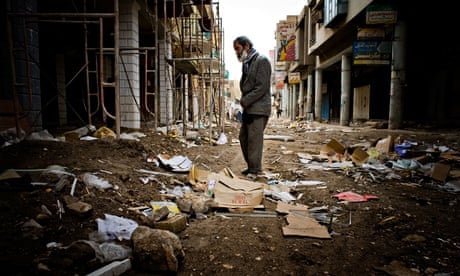
'Kitab/Katib', 2008. Hand printed and illustrated broadside to commemorate the bombing of the book market in Baghdad in 2007.  **See previous blogpost.

---------------------------------------

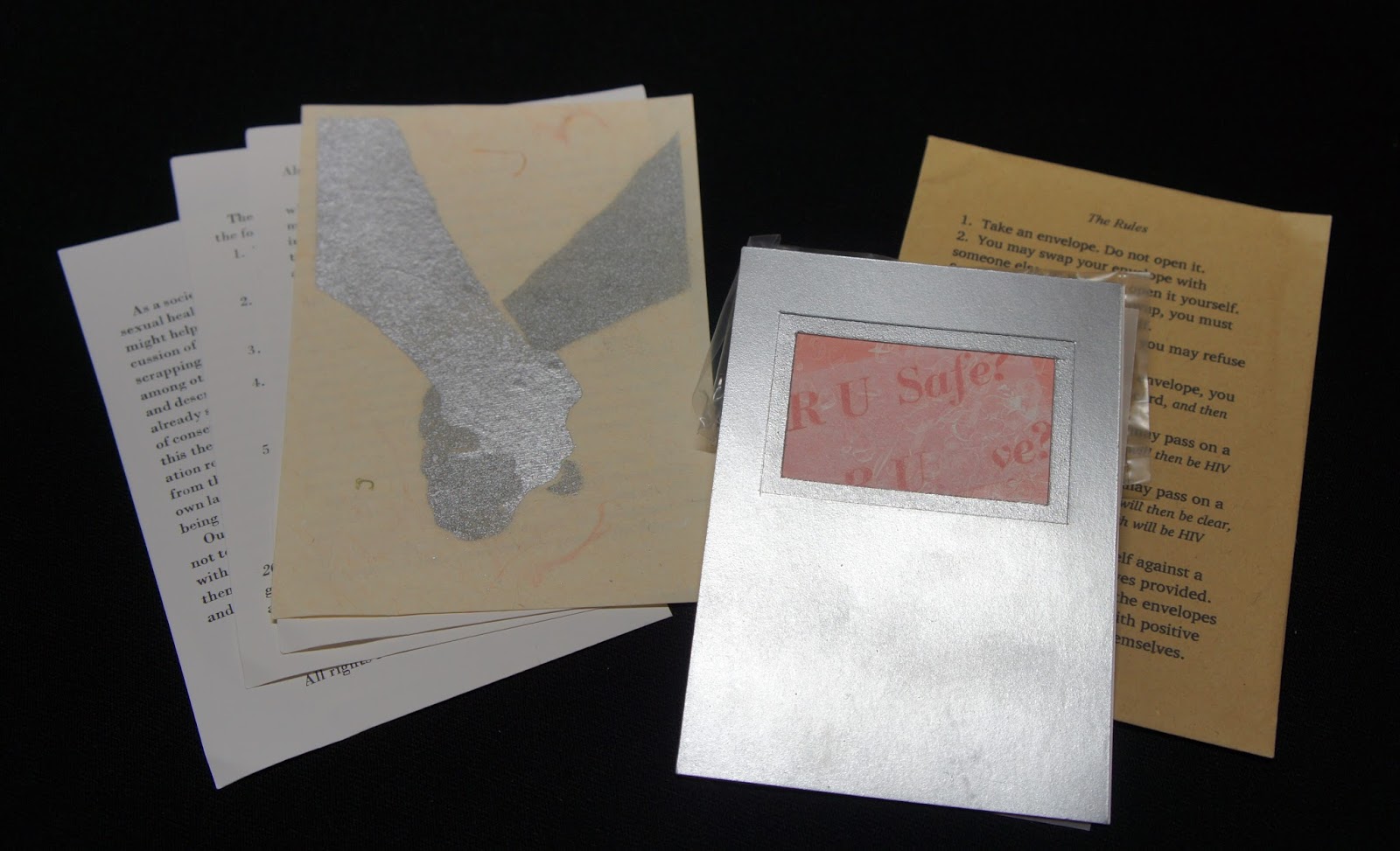
'Last Night It Did Not Seem As If Today It Would Be Raining', 1996. Edition of 30, multiple printing methods including letterpress, offset, lino and screen print. 
Designed to illustrate the choices made in the transmission of Std's and HIV.


----------------------------------------

'Mapping The Oneiric House', Unique book, 1997.
Based on Gaston Bachelard's 'Poetics Of Space'. Blind embossed etched plate illustrations and hand set letterpress type. Hand carved, sculpted plaster cover.


---------------------------------------

'Húum.mÁ~n' - An Ode to Bob Cobbing', 2002. Open edition of photocopied images of digital distortions based on Bob Cobbings' initials. Produced to mark his death in 2002.


----------------------------------

'Phaedra', 2000. Open edition leporello, printed on an electric word processor with digitally printed covers. The text is a 'stream-of-consciousness' performance piece designed to be read aloud, based around visions of consumerism and religious iconography.


----------------------------------------

'Ritual and Circumstance', 2002. Edition of 75. Printed, folded sheet of heavy watercolour paper into which has been smashed a glass ball. Celebrates the hammer as a printing tool...

---------------------------------------

'Sea Of Clouds', 1998. Edition of 50. Leporello, printed letterpress with 'dry' printed, etched illustrations. The text is taken from the 1965 HMSO publication "Instructions For The Preparation Of Weather Maps".


------------------------------------

'SILT'. A 'zine that I published from 1998 to 2012. Essentially a vehicle for various modes of writing and illustration. An eclectic kaleidoscopic vision, by turns surrealistic, dark, poetical, comic and tragic. Character filled and opinionated. Often all at once. Should have done better than it did, but no one actually gave a shit. Still one of the publications that I'm most proud of.


-----------------------------------------------

'Stone Dead Forever', 2008. Open edition, two volumes published through blurb.com in both hard and paperback. A photographic record of a project I started in 2008, writing on stones on the local beach. There is an earlier blogpost Here. 


-------------------------------------------

'The Dixon-Hurlingham Mysteries', 1999. Published to commemorate a memorable Christmas event, in which 'a protagonist' [anon], threw a Christmas tree - still in its pot - through the roof of a neighbouring building from five floors up...


----------------------------------------------

'The Interactive Book', 1997. Edition of 20, letterpress, loose 14 page folio with hand calligraphied, folded covers. A collection of quotes about books, printed in typefaces contemporary with their origination. 


-------------------------------------------------------------

'Title <> Author', 2000. Originally produced as something to do while whiling away the weekend at the Y2k Bristol Artists Book Exhibition (BABE), at the Arnolfini in Bristol. The edition was compiled from off cuts of Fabriano paper and pre-printed stickers that I had taken with me. It was later re-produced in a Moleskine edition.


-------------------------------------------------

'Typecast', 1998. A group publication, self funded and published by myself and a select group of recently graduated illustration students for our first independent showing at the Artists Book Fair at the Barbican Centre, London in 1998. Beautifully designed and printed by Mike Cooter at the uni print dept. and out of date before it even hit the stands... typical.
*F.t.a.g.h. - contact me if you want one!


------------------------------------------------------

'Typonegative', 1998. Edition of 30. Incorporating handmade and printed elements with imagery cut from adverts in glossy magazines. Hand stitched, hand printed covers.


----------------------------------------------------------

'The Universal Book Of Tongues', 1997. Unique book. Hand made, letter-pressed covers, mono-printed tracing paper images dry mounted onto Fabriano paper and perfect bound. A visual exploration of calligraphic mark-making in the context of an essay on linguistics and the origins of speech by Noam Chomsky.


---------------------------------------------------------

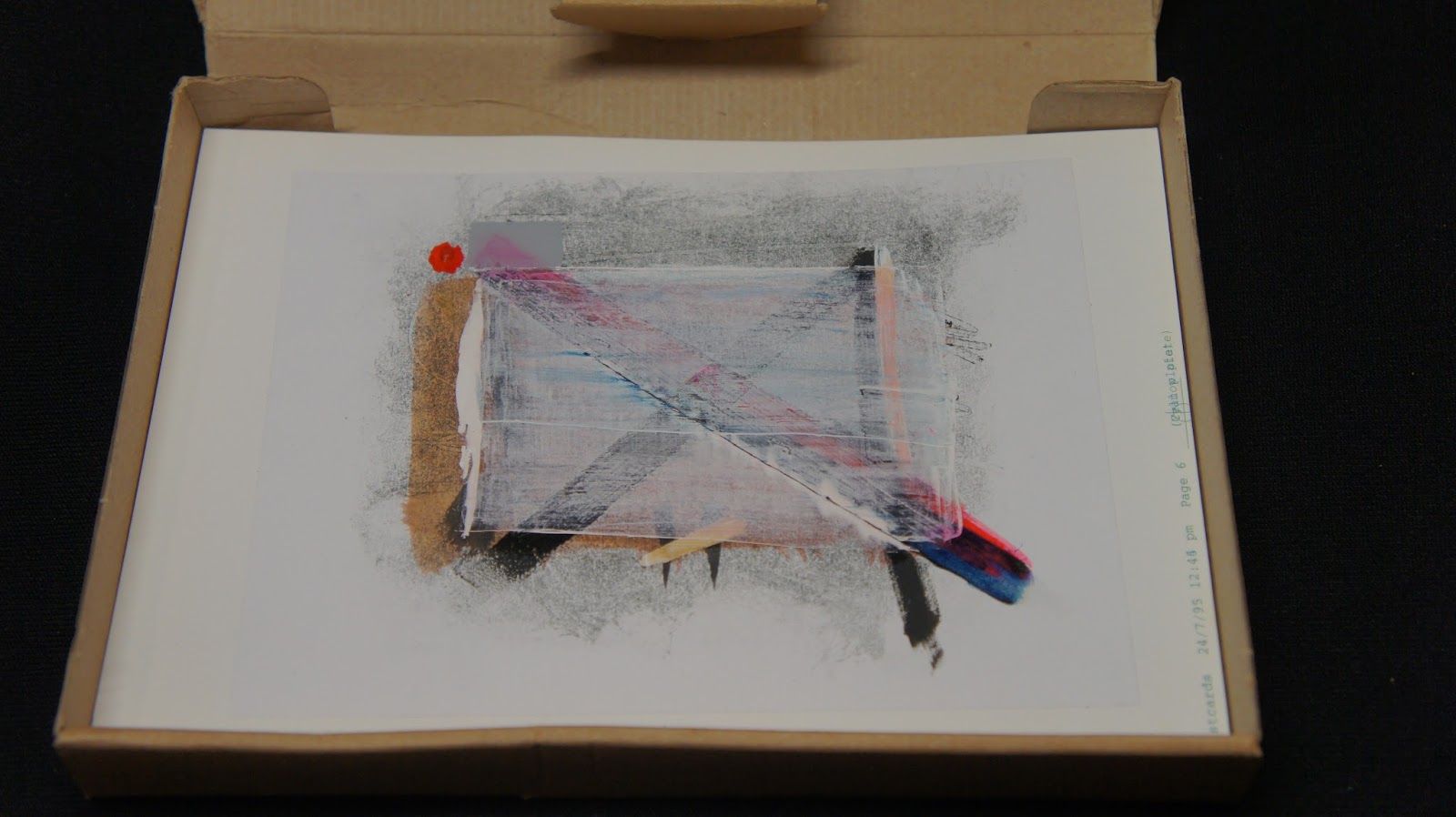
'Untitled', 1999. Boxed folio of 33 hand-finished calligraphic monoprints. Finished with graphic additions in colour gouache individual to each print.


-------------------------------------------------------------------------

'Urban Wildlife', 2004. Edition of 25. Handmade 'Khadi' paper covers featuring stencil and authentic pigeon 'shit'. Folded, stencilled plastic lining interwoven with pages from London A-Z, bound with crimped fluorescent fishing line. Inside each book is a used rail ticket 'colophon', a typewritten 'treatise' on Urban Wildlife, an invitation to a 'Poisoning Pigeons in the Park'** event and a couple of origami pigeons also made from London A-Z pages. 
(**Bring your own cyanide laced raisins...)


---------------------------------------------------------

'Veneer', 2004. Unique book work. 7 digitally printed 'page scrolls' encased in sand and clear resin inside three unique, handmade, engraved, glazed ceramic cases.
(**Unfortunately, two were damaged in transit on their way back from a show. Shit happens.)

------------------------------------------------------------

'Write Protected', 1997. Unique bookwork. 8 floppy disks stitched into a thin plywood binding.
The content of the book is entirely digital and stored on the disks which can't be accessed because the stitching goes right through them. I no longer have a record of the content.


-----------------------------------------------------------------

There are at least two more books that I can think of that are no longer represented here because I sold them and the photo archives are deep, deep, dark places for a man to wandering alone in. Maybe one day when I am otherwise incapacitated... until then, hold your breath.

The vast majority of these editions still have a few copies and re-runs left. If you're interested in any, drop me an email.

If you've made it this far and haven't expired from boredom or despair, thank you with all my heart for your commitment and stamina. 

Peace and love, Los Dave

**Poisoning Pigeons In The Park' is not and never was an actual event. It's a comedy song from the 1950's by Tom Lehrer!! - Catch it here :)

Wednesday, 9 March 2016

Kitab/Katib - A Memorial For Al Mutanabbi Street, Baghdad 2008


A Memorial for Al Mutanabbi Street


In 2008 artists, writers, printmakers and poets from communities across the globe to contributed to a commemorative project marking the destruction of an ancient and significant literary and cultural market in ancient and contemporary Mesopotamia.

Mutanabbi Street is the historic centre of Baghdad book selling, a street overflowing with book stores and outdoor book stalls. A gathering place for academics, progressive thinkers, poets and philosophers, writers, artists, and home to countless family run, small press printers, binding houses and publishers. It is one of the oldest and best known streets in the Iraqi capital.

Named after the 10th-century classical Iraqi poet Al-Mutanabbi, the street has been referred to as the heart and soul of the Baghdad literacy and intellectual community. Largely politically tolerated for it's at times, not-so-subtle, potentially subversive intellectual liberalism, and often regarded as a seismograph of the state of Iraqi culture over the course of the centuries. The history of the street goes back to the time of the Abbasids. It was the site of the first book traders' market in the metropolis that was Baghdad, with its almost inexhaustible supply of books, Al Mutanabbi Street served as a contemporary witness to the political and cultural changes taking place in Mesopotamia.


On March 5th 2007, a car bomb exploded on Mutanabbi Street killing 30 people, injuring 120, destroying lives, families and livelihoods. In response to the bombing, in 2008, American poet and book store owner Beau Beausoleil began a project dedicated to commemorating the culture and history of the street and the population that inhabited it for generations before the attack. 'Al Mutanabbi Street Starts Here' began as a coalition of artists, writers, academics and institutions from all over the planet. The project has since grown into a global community, memorial and phenomenon encompassing a myriad of events, readings, publications and exhibitions and spawning a series of off-shoots and continuation projects.

Such was the obscenity of this attack on a principal historical site of embryonic human literary endeavour that the repercussions are still rippling through creative communities almost ten years later. This video of the owner of the Shabandar Cafe, Mohammad Al-Khashali, talks with such intensity and clarity of his experience of the bombing that it's difficult not to feel an empathy. However, his message is clear, as the title of the film suggests, Forgive, But Do Not Forget.

----------------------------------------------------

Kitab*Katib

No one wants to be the [ice] book seller

An inflammatory instant of forgetting
In a bloom of fire and blood-letting
A memory comes in a flash
And blows across the desert; ash.

Is Heav'n the thought, or body of the thinker?
Philosopher, poet, soldier,
You may well fight to separate
Ancient Tigris and Euphrates.

Al Mutanabbi remember,
A gentle kiss upon a page
And a river of printers ink
Carries abroad what writers think.


Copyright David G Kirby, 2008


Above is the broadside that I produced in 2008 for the project. A poem and a call to remember a long venerable history of conflict, survival and revival printed in a 'John Bull' font and illustrated simply with a stencilled feather.

Edition of ten. Copies available from davidgkirby@hotmail.com

On December 18, 2008, Iraqi Prime Minister Nouri al-Maliki officially reopened Al Mutanabbi Street after a year and a half of cleanup and repair.
-------------------------------------------------------

More on Mutanabbi Street, the projects of Beau Beausoleil and others here -


Follow me on Instagram, Twitter, ArtFinder and Big Cartel

Saturday, 27 February 2016

Microhenge - Or How To Build Your Own Mesolithic Monument

There's been an incremental shift in my subject matter lately. A small evolutionary step that shifts the focus of my work, but changes the nature of the beast dramatically. This is the inclusion of standing stones into the landscapes.  


Off the back of the mural at Southsea Coffee Co. (see earlier posts), for the first time, I am allowing clear signs of human presence into the landscape. As far as my landscape work is concerned, this represents a huge leap. Of course that presence is still highly codified, but it is undeniable.

Over the last couple of months, I've been studying for my Armchair Professor of Archaeology badge by watching all 20 series of Time Team on C4. This clearly makes me an expert, and got me thinking. One thing that really comes across with such an intense study programme is how archaeologists never really take into account the day to day mundanity of the stuff they uncover. Everything is always "High Status" or "Ritual". Nothing was ever done by a bloke called Geoff, just trying to keep his family together, his kids fed and out of trouble and the rent paid.

The SsCCo mural led to some interesting conversations about how these things might, more realistically and pragmatically have come about. And this little 'Microhenge' experiment was a small scale attempt at trying to get into that head space.

We tend to forget that Stonehenge was contemporary with the pyramids, both being developed at the same sort of time. We should also remember that people were not at all limited to their own home ranges, their own countries or even their own continents. There is plenty of good archaeological evidence to show that people were getting about well enough to be invading other countries, building empires, stealing, pillaging and taking slaves (and with them, their technologies), and generally mixing up the gene pool WAY back in the day. Sure they had to get about largely on foot or by camel or relatively rickety boat, but their navigation, surveying, engineering and manufacturing skills were evidently well developed enough to construct monuments that would present massive challenges to today's civil engineers. Arguably they'd have the Crossrail done by now.


I digress. So, here's my theory on Mesolithic structures, based on creating the 'Microhenge' in the photo above. Firstly, these are not static landscapes, they are dynamic, potentially highly emotionally charged spaces; BUT - not necessarily 'sacred' or 'ritual' or 'spiritual'. Let's not get all tree-huggy or mythological about it.

I would tend to go with 'Ceremonial' rather than 'Ritual'. Ritual implies repetition and a 'Spirirtual' dimension - all a bit farty - everyone involved discussing the job in hushed reverent tones. 'Ceremonial' seems more down-to-Earth. Something that need only happen the one time, but is significant in a more connective, communal way; such as marking an allegiance to the family/clan/tribe/community for example, or a wedding. A way of saying "We were here", or "The elk come through here in the Autumn. We need to remember this spot", or
 "This is where that bear got Dave's leg. We need to remember this spot", or "We should definitely do something to mark Geoff becoming leader. Geoff's a good bloke to have in charge. We should make this to show how much we appreciate his leadership skills. Big up Geoff!"

On a purely practical level, these would have been built by communities - definitely a team effort. I started off by collecting suitable stones. It's debatable whether they got the stones together first then planned it according to how many they could get their hands on, or planned it out first and then brought the required number of stones. Maybe each family was asked to contribute towards a stone or something, but certainly needed to give a hand with the building. 

   "I don't see why I should be paying my hard earned taxes for them to go and spend it all on some poncy 'tourist attraction'! It'll be a bloody white elephant within a year, and then who'll have to live with it in their back yard eh?"

And gradually the conversations started to pile up in my head.

Communication was of course, utterly essential. One person could have come up with the idea, but he/she would have to get the rest on board. "We could do one of those stone circles. They're all the rage at the moment." 

   "My missus' sister Dolly said they've got a new one up at her aunts place in Scotland. Says it's only small, but it's very pretty and it gets the job done. Very popular by all accounts."
   "That's all we need, more bloody tourists!"

There would have to be an agreement that they would all do this. "Here he goes again with his bloody stone circles. Have you any idea what it takes to put one of those things up?" 

   "They're just a bloody eyesore if you ask me. I don't want one of them things blotting out the sunrise everyday."
   "We could just do a small one. It doesn't have to be massive." 
   "Didn't Dave's cousin Rick do one over at the island last year? We could ask him."


There would be discussions about the best spot. On top of the hill? Down the hill slightly, on the more sheltered slope? "Bugger going all the way up there in the sodding winter!" 
   "How about down by the estuary? It's lovely down there in the summer. Me and the missus went there last year..." 
   "And we could bring some stones up by boat. That'd save a bit of effort."

There would be discussion about selecting the stones - local or something from elsewhere? "Geoff's mate Steve has got some nice blue ones over in the next valley." 
   "Mate, that's forty miles away!" 
   "Don't worry about that. Dom's got this idea of using, like, trees as rollers or something. He was telling me about it last week. Don't actually get it myself. I was never very good with engineering. I'm more sort of arty."

Quarrying and moving multiple big stones - getting them delivered. 
   "How many do you want? Well, I've got 14 in stock now that you can have, but you'll have to come and pick them up."
   "Nah mate, can't help yeh. We've got a big job on down in Glastonbury, we can't get to you till at least next Tuesday."
   "Who's in charge round here? We've got some stones for you." 
   "Big Dave? That's him over there. The fellah with the big stick and the hat on." 
   "That's not what I ordered! I said Blue!"
   "Well I'm not dragging them all the way back. You'll have to get in touch with the office."


"What the bloody hell's that? This thing's supposed to be 18 feet high." 
   "Nigel gave me a drawing that said 18 inches. Now, whether or not he knows the difference between feet and inches is not my problem. I do what I'm told." 
   "But you're not as confused as him, are you? I mean, it's not your job to be as confused as Nigel." 
   "I do not, for one, think that the problem was that the team was down. I think that the problem *may* have been, that there was a Stonehenge monument that was in danger of being *crushed* by a *dwarf*. Alright? That tended to understate the hugeness of the object." 
   "I really think you're just making much too big a thing out of it."
   "Making a big thing out of it would have been a good idea."


Laying out the plan need not have been so complicated. A simple stick in the centre and a string of the appropriate length would have marked out a good circle. Use the same number of people as stones, standing equally spaced around the marked out circumference, when they are in the right places, they push in a stick or otherwise mark the ground. Then the digging can begin. 
   "Tony mate, more to your left. No, I said left! Colin, can you show him which is his left? - Oh, for crying out loud..."

The hard part would be actually lifting the stones into position. 
   "F#<*in' 'ell John! That nearly landed on my f#<*in' 'ead you <#*^!!"   
   "I said right at the start we should have made it smaller." 
   "Well, yeah, and we were going to put a roof on it, but we got the lintels up and they ran out of money..." 
   "It's all the trades that got laid off I feel sorry for."
   "Well there's always been plenty of work in the henge trade if you're prepared to travel for it."
   "It's not the same these days. They're just not building them anymore. It's all barrows and ditches these days."
   "Our Kevin's just got a job on that new one they're putting up near Salisbury. Sends half his wages home to his mum every week without fail. He's a good boy is Kevin."

The people who put these monuments up are us. Their DNA is our DNA. Their conversations would have been none-the-less inane, their arguments, problems and solutions no less ordinary. 

   "What are you up to today then love?"
   "I got to go up to the new henge they're building on the old cemetery and fix a bunch of shovels. I swear, those morons don't know one end of a spade from the other. A bunch of trained monkeys could do a better job."
   "Ooh, could you take my sandals and drop them off at the cobblers on your way? The heels have worn right through. Bloody cheap imports! That's the last time I buy anything Scandinavian."
   "How do you confuse a Gaelic fellah? Show him a pile of shovels and tell him to take his pick..."
   "Yes dear. Will you be home for lunch?"
   "Should be."
   "Bring the washing in if it's raining would you? Thanks love."


Saturday, 13 February 2016

Liminal Zones - Towards A Poetic Horizon

“The edge of a painting is its frontier, where the artist negotiates his boundaries with the real world.” - Andrew Graham-Dixon


In art the aphorism ‘It’s not just the path you choose to take, but how you choose to walk it’, often defines the perceived identity of the artist. Some artists are so strongly identified by and with their work that their identity and their work become elevated in a cloud of mythology. Especially those with a strong style - Warhol, Picasso, Basquiat, Banksy. Context is everything. The art is the artist and vice versa.
In my own work, the landscape is the context for every living experience here on Earth. Even the oceans exist on a bed of rock. As we look across the land, the horizon is the last visible surface; the very edge, the very limit of the solid/liquid Earth, above which everything is vapour, gas and space. The boundaries between subsequent layers become increasingly obscure as the atmosphere peters out.

The landscape paintings I make are often dark, monochromatic, superficially empty; apparently unoccupied. Ethereal tonal and textural shifts underpin and overlay spontaneous, improvised ‘calligraphic’ mark making, organic details and forms. Always there is the horizon delineating the edge of the visible world. But this edge shifts. Every step we take towards it, so it moves on a step. The edge/horizon is as easily a perpetual, incremental shift as a sudden cut to something else. And because the world is a ball, we can chase the horizon, the edge forever. There is only change and continuity.  

Conversations about my landscapes often revolve around the impression of aged conflicts and aftermaths. Arbitrarily select a period of time between the formation of the Earth and its current state and draw a line; a horizon. At first empty, devoid of any animate presence, but there is always geology, weathering, erosion, movement and change. Once, there were no fences, no borders, no roads; only horizons. There was a time when the Earth was simultaneously burnt and frozen; a time when life on Earth was microbial, small, but on an epic, epic scale; enough to change the composition of the atmosphere and the evolution of life on the planet. These are dynamic spaces. Change and continuity.


Such boundaries are imaginary and crossing them or transgressing becomes an impossibility. So in art, how can we tell a simple line is a horizon and above it sky, below it Earth? Anthony Gormley refers to “The space occupied by the human consciousness when our eyes and ears are closed”. The senses are the horizon between our selves and the world. Our images, our lives are lived on internal landscapes. Our consciousness is an ethereal presence. When we look, we occupy. But ultimately we cannot efface the permanence of loneliness. There is nobody in here but me. All the rest are ghosts, memories, dreams, fantasies; implications of a population/presence. The weather and geological processes are effects of external experience; erosion of memory, the corrosiveness of living. All of this is drawn through an awareness of tonality and texture that extends into atmosphere, mood and space; grey, liminal. The senses are the boundary, the interface, the horizon between what is solid and what is esoteric, our selves and the world.

You can see much more of my landscape painting on Flickr --> Here


Follow me on ArtFinder

Monday, 8 February 2016

An Sean, Scéal D'aois - The old, old story.

An Sean, Scéal D'aois


An inlet to a shallow bay on a small island just off the mainland. It's been a heavy crossing and the landing promises to be no less difficult, dangerous or exciting. On either side of the inlet stand two stones. Fairtheoirí - Sentinels, markers indicating the entrance, but at the same time a way of saying, "We have been here, we knew you would also come. Take care".
______________ _ ______________
Two men regard each other across a treacherous passage. There is a clear tension in the air. The way they watch each other is a clear indication that they know each other well. They watch like wolves, their gaze unwavering, constantly judging every twitch and shift in stance. They cannot leave. They dare not turn away or back down. They stand there for so long that they become stone.
______________ _ ______________
Two Sirens - jealous rivals for the affections of the hero Odysseus, sit on opposite headlands calling and singing with the most beautiful voices. Their story is legendary among the local people. Whichever can lure the greatest number of ships and sailors to their graves, will finally win the heart of the ancient warrior. But unaware of Odysseus' death on Ithaca centuries before, the Sirens remain locked in constant battle and ships and men still fall to the charm of the Sirens song.
______________ _ ______________

Barddubh and Luigsech the son and daughter of neighbouring rival clan chiefs begin a deeply passionate illicit relationship. These two chieftains themselves have a history buried deep in the peat of the earth. They are the brothers Áedán and Caomh. Their father Carraig, tired of their jealous bickering over who will inherit his land banished his sons to these islands long ago.

Their last remaining link to each other is this causeway, built by Carraig as a test of the brothers familial honour and commitment. Whichever pulls down or allows the causeway to be destroyed will be disinherited and lose everything. A deep, bitter resentment over their plight lies in the hearts of these two men, but such is the power of their stubbornness and greed, the bridge becomes a monumental testament to their rivalry.


When the love between Luigsech and Barddubh comes to light Áedán and Caomh are mortified. Beyond Luigsech and Barddubh's dishonour to their respective fathers and families, is the hidden disgrace of incest. There is no choice. The causeway has to go.


Watched by their offspring the brothers, in a burning fit of despair set to with mighty axes, each from his end of the causeway, smashing and hacking at the timbers until they are reduced to splinters. Eventually the brothers meet in the middle, still hacking at the timbers around their feet, until they both fall into the surging tide and are swept away to their deaths. The mourning lovers stand in silent vigil over their (literally) monumental loss
.


Follow me on ArtFinder


Monday, 1 February 2016

GUTHANNA ÁR SINSEAR


Guthanna Ár Sinsear

(Voices Of Our Ancestors)
This 60cm x 30cm canvas is currently available for sale over on my Big Cartel site at losdave.bigcartel.com


Inspired by painting the big wall at Southsea Coffee Co. I spent a couple of hours in the studio at the weekend - the first productive studio time I've spent since Christmas. The whole concept and mythology surrounding these ancient megalithic landscapes has really got the ol' juices flowing.

Anyone familiar with my landscape work will recognise the themes of emptiness and wilderness. I choose my words carefully in describing these places because while they are unpopulated, they are far from barren or desolate. Often, there is a great deal of life in them, it's just not immediately obvious. This is partly because I was diverted from the clichéd path of the tiny figure in the large abstract landscape at college, with dire omens and the foretelling of a doomed career in Graphic Design - the 'Dark Side' of illustration!

I have a natural aversion to populating my landscapes with tiny figures. My enduring interest is in the idea of the landscape while it was still pristine and undivided. When the only borders and boundaries that existed were formed naturally by geological and meteorological processes; where coasts meet the oceans, valleys, rivers, mountains, forests and plains.

I've said elsewhere that for a long time, I've been itching to do something with the subject of ancient archaeology; standing stones, stone circles, Mesolithic and neolithic structures. This period lies on the path to the imperative to decorate ourselves and our surroundings; to communicate and tell stories, to record events, to remember and respect the past, 
to make 'art', something deeply, deeply primal.

These archaeologies mean I can add traces of habitation without obvious direct references to actual people. Stone monuments refer to 'us' rather than 'me'. They are both in and of the landscape and they have a strong sense of 'other-worldliness'. It's a huge psychological leap to understand that these structures were built by the same people as us - our ancestors, and that their culture is as embedded in our DNA as these massive stones are embedded in our landscapes.

I imagine that somewhere in the long distant past there was a man who stood in the tall grass eddying under a windswept leaden sky, with the shadows of the forest at his back, atop a hill looking out over an untamed landscape, who looked at his companions and said* "You know what would look fricking amazing just here, right... You remember that sort of bluey grey granite we saw up that mountain in Wales?"

*But in Gaelic

This painting has now sold, but you can still Follow me on ArtFinder